
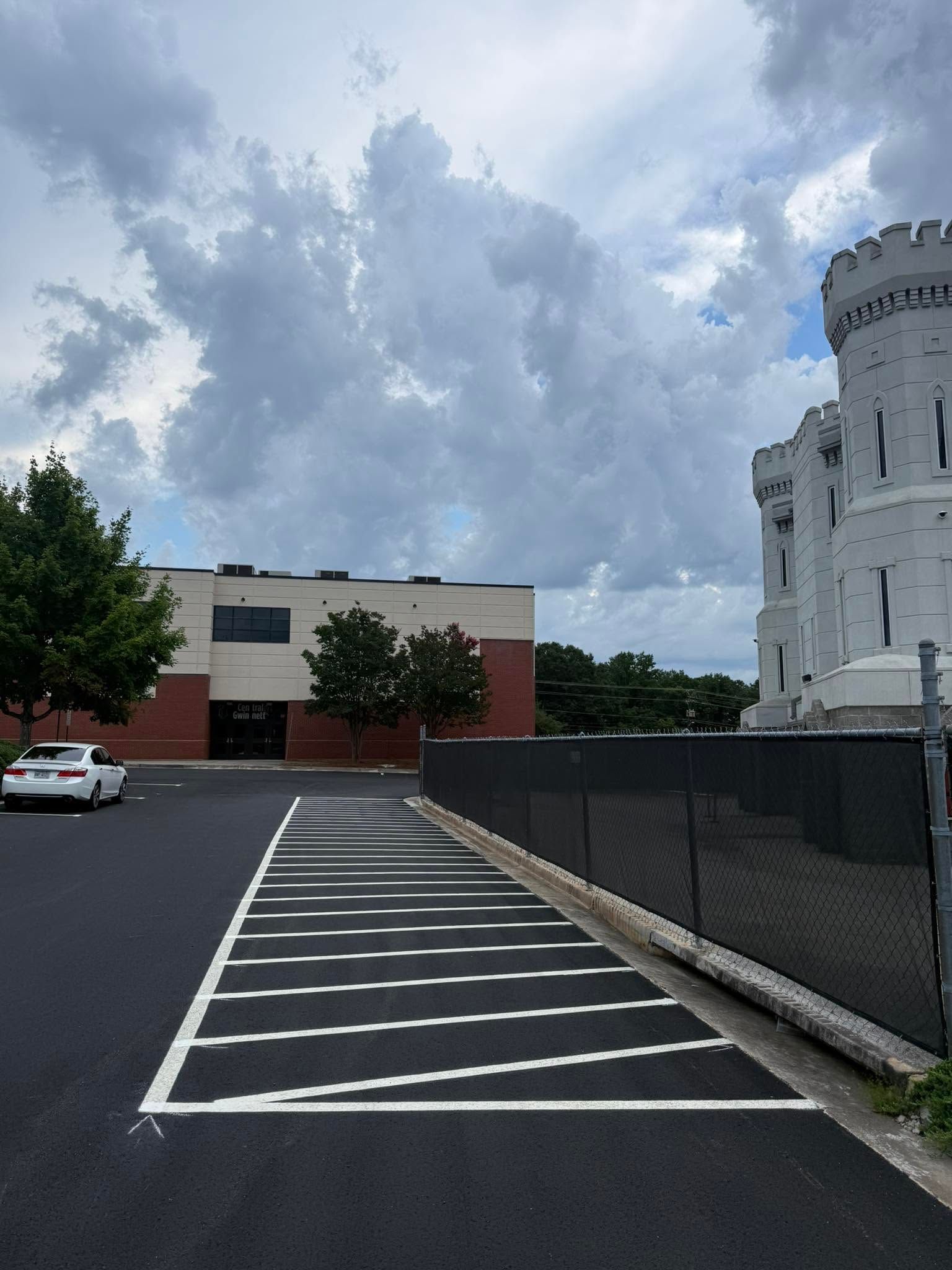
Stable, Even Asphalt Surfaces Built from the Ground Up
Paving in Dallas for properties that need a new driveway, parking area, or substantially renewed asphalt surface installed correctly
What remains after a paving project is finished tells most of the story about the quality of the work that went into it—a surface that drains correctly, sits flat without high or low spots, and holds its edge without crumbling away from curbs or transitions reflects preparation decisions made before the first load of asphalt was placed. Showtime Sealcoating & Striping approaches paving projects in Dallas with attention to the grading and base conditions that determine how the finished surface performs under traffic and weather. Property owners typically need paving when an existing surface has deteriorated beyond the point where maintenance treatments can extend its useful life, or when a gravel or unpaved area needs to become a functional paved surface.
Preparation work is where paving projects are won or lost. Grading the subgrade to direct water away from the paved area—rather than allowing it to pond underneath—is a foundational step that affects long-term pavement performance more than the asphalt layer itself. In the Dallas area, Georgia's clay-heavy soils can shift with moisture changes, making base compaction and drainage planning particularly relevant. A stable, compacted base distributes the load placed on the asphalt surface across a broader area, reducing the stress concentration that leads to premature cracking and surface failure.
Request a paving estimate that includes an evaluation of the existing site conditions and drainage characteristics.
What the Paving Process Actually Accomplishes
Asphalt paving involves subgrade preparation, base material installation and compaction where required, and the placement and compaction of the asphalt mix itself. Compaction of the hot mix is time-sensitive—asphalt must be compacted while it retains enough heat to allow proper density, and inadequate compaction produces a surface that contains more air voids than it should, making it more susceptible to water infiltration and early raveling. Edge work also matters: clean, well-defined edges where the pavement meets adjacent surfaces or grade transitions hold up significantly better than edges left feathered thin or unsupported.
Once the paved surface is finished and cooled, the difference from an unpaved or deteriorated area is immediately functional. Vehicles move across a smooth, consistent surface without the jarring irregularities that mark damaged or loose-material areas. Drainage follows the intended slope rather than collecting in random depressions, and the space becomes genuinely usable for its intended purpose—parking, access, or circulation—without the ongoing maintenance demands that deteriorated surfaces require.
Paving scope varies considerably based on site size, whether demolition of an existing surface is needed, what the base condition requires, and how much grading work is involved. Showtime Sealcoating & Striping reviews these factors on-site before providing an estimate, because the preparation requirements for a small residential driveway differ substantially from those of a commercial parking area with drainage constraints.
Questions Before Starting Your Paving Project
Property owners in Dallas considering a new paving installation often have practical questions about what the process involves and what factors affect the finished result.
Why does drainage planning matter so much before asphalt is placed?
Water that cannot drain off or away from a paved surface will find its way beneath it—in Georgia's clay soils, that moisture causes subgrade softening that leads to surface depression and cracking well before the asphalt itself would otherwise wear out.
How does base preparation affect how long the finished surface lasts?
Asphalt placed over a poorly compacted or unstable base will begin showing reflective cracking and surface deformation as the base shifts—the asphalt layer itself is only as stable as the material supporting it.
What site conditions affect the cost of a paving project most significantly?
The amount of existing material that needs to be removed, the depth of grading required to achieve proper drainage slope, and whether the base needs to be rebuilt or can be reused are the primary variables that affect project scope and cost.
When is the right time of year to pave in the Dallas area?
Asphalt paving requires ambient and ground temperatures above a minimum threshold for proper compaction—spring through early fall typically provides the most reliable conditions in this region.
What should a finished paved surface look like immediately after completion?
A properly finished surface shows consistent texture, clean defined edges, and no visible high or low spots—water applied to the surface should sheet off following the intended drainage slope rather than pooling in flat areas.
Showtime Sealcoating & Striping evaluates site conditions, grades, and base requirements before recommending a paving approach for your specific property. Call (770) 286-3380
to set up a site visit and receive a detailed project estimate.